Sewer Line Repair in the USA
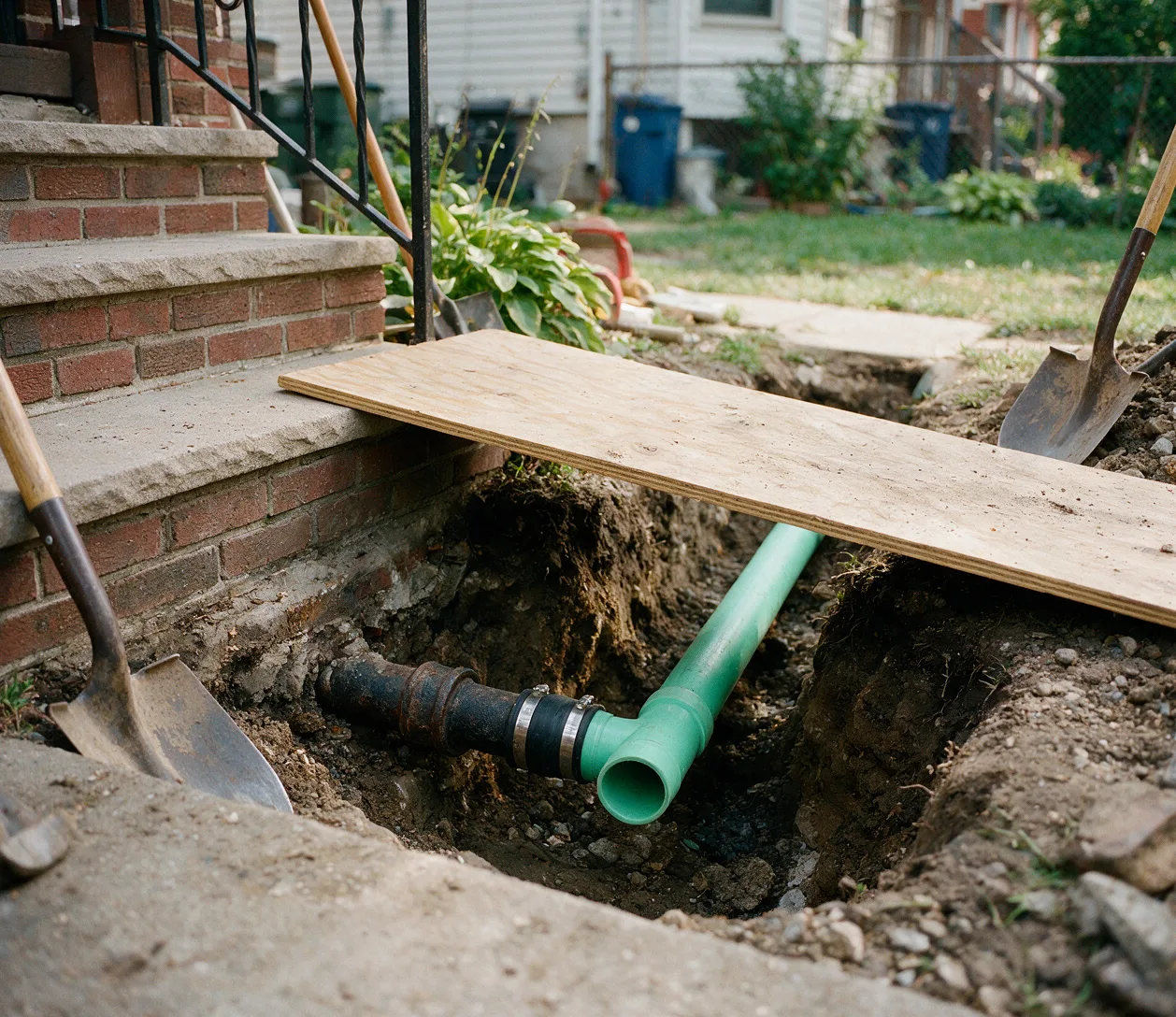
Sewer lines fail when roots invade joints or when cast iron rusts through after decades underground. Our technicians first locate the cleanout and run a camera to measure pipe diameter remaining and spot any bellies or offsets. Homeowners should shut off water to toilets and tubs once backups start so waste does not push farther into the line.
Ground movement or heavy trucks can crack clay sections that were laid before PVC became standard. We check slope with a digital level at exposed points and note where the line leaves the foundation. Clearing the main cleanout with a machine cutter often buys time but never fixes the broken pipe itself. Check the shutoff valve first then contact Jersey Plumbing for sewer line repair help anywhere in USA.
Warning Signs of Sewer Line Failure
- Multiple fixtures back up or drain slowly together.
- Gurgling sounds come from floor drains after flushing.
- Sewage odor rises near basement floor drains.
- Wet patches appear in the yard without rain.
- Toilets lose water from the bowl without use.
Common Causes We See
Tree roots follow moisture and force open clay or cast iron joints. Once inside they collect paper and grease until flow stops. We measure root density on camera footage so the homeowner knows whether annual cutting will hold or if the section must come out.
Old cast iron develops scale that narrows the bore and traps solids. Galvanized vent lines that leak above the sewer can drip and corrode the main from above. Both conditions show clearly on video before any digging starts.
What Our Technicians Inspect
We run a camera from the cleanout to the street connection and record pipe material changes and any sags. A locator traces depth so we know how much cover exists over the line. Slope is checked at two points to confirm the original grade still works.
We also test each fixture individually while watching the camera. This shows whether the problem sits in the house branch or the main sewer. Measurements of remaining wall thickness on cast iron tell us if lining will hold or if full replacement is required.
Repair Options Explained
Trenchless pipe bursting replaces the old line with new HDPE in one pull when the pipe is collapsed. Spot excavation works when only one joint has failed and the rest of the run is sound. We always show the camera footage so the owner sees why one method fits better than the other.
Cured-in-place lining coats the inside without digging when roots have entered but the pipe shape remains round. This adds years of service on straight runs but cannot fix severe bellies or offset joints. The choice depends on what the camera measures.
Materials and Parts Used
We install Schedule 40 PVC or SDR 35 for gravity lines because both resist root intrusion better than clay. For high-pressure sections we use fusion-welded HDPE. Cleanout fittings are always brought to grade with cast iron lids so future camera work stays easy.
Rubber Fernco couplings connect dissimilar materials without leaks. Backwater valves go in when the line runs below the street elevation. All joints get leak tested with water before backfill so the repair does not become the next problem.
Sewer Line Repair questions
How do you find the break without tearing up the yard?
A camera snakes in from the cleanout while a locator tracks its position above ground. We mark the line on the surface and only open the sections that show damage on the recording. Most homes need only one or two small pits rather than a trench the full length.
Can roots be stopped without replacing the pipe?
Machine cutting removes roots but they return within months on cast iron or clay. We can install a liner that seals the joints so roots lose their entry points. When the pipe has already collapsed or lost shape, replacement remains the only permanent fix.
What should I do while waiting for the technician?
Stop running water in sinks tubs and toilets. Lift the cleanout lid outside if you have one and let any standing water drain away from the house. Avoid chemical drain openers because they do not reach the sewer line and can damage the remaining pipe.
Will the new line be the same size as the old one?
We match the original diameter when the slope is correct. If the old line sagged and collected solids we may increase the size one nominal step to improve flow. The camera measurement and slope check decide the final size before any pipe is ordered.
Arrange Sewer Line Repair
Call when backups appear. We inspect the line with camera and explain the measured options before work begins.