
Faucet and Sink Repair in the USA
Faucet and Sink Repair starts with isolating the angle stops under the basin. Our technicians check if the shutoffs still turn and hold pressure before opening the supply lines. Old galvanized or copper lines often develop pinholes right at the compression fittings that drip into the cabinet.
Sink bowls crack along the seam where the drain body meets the porcelain or stainless. We measure the existing drain opening and trap arm length so the replacement matches the rough-in without moving the trap adapter in the wall. Toilet problems start with the flapper so Jersey Plumbing inspects that before faucet and sink repair.
Clear Indicators Faucet or Sink Work Is Needed
- Water drips from the spout hours after last use.
- Handle turns but flow stays weak or stops entirely.
- Rust stains appear under the sink on the cabinet floor.
- Drain empties slowly and gurgling comes from the trap.
- Hot or cold supply line feels damp at the shutoff valve.
Typical Causes Behind Faucet and Sink Failures
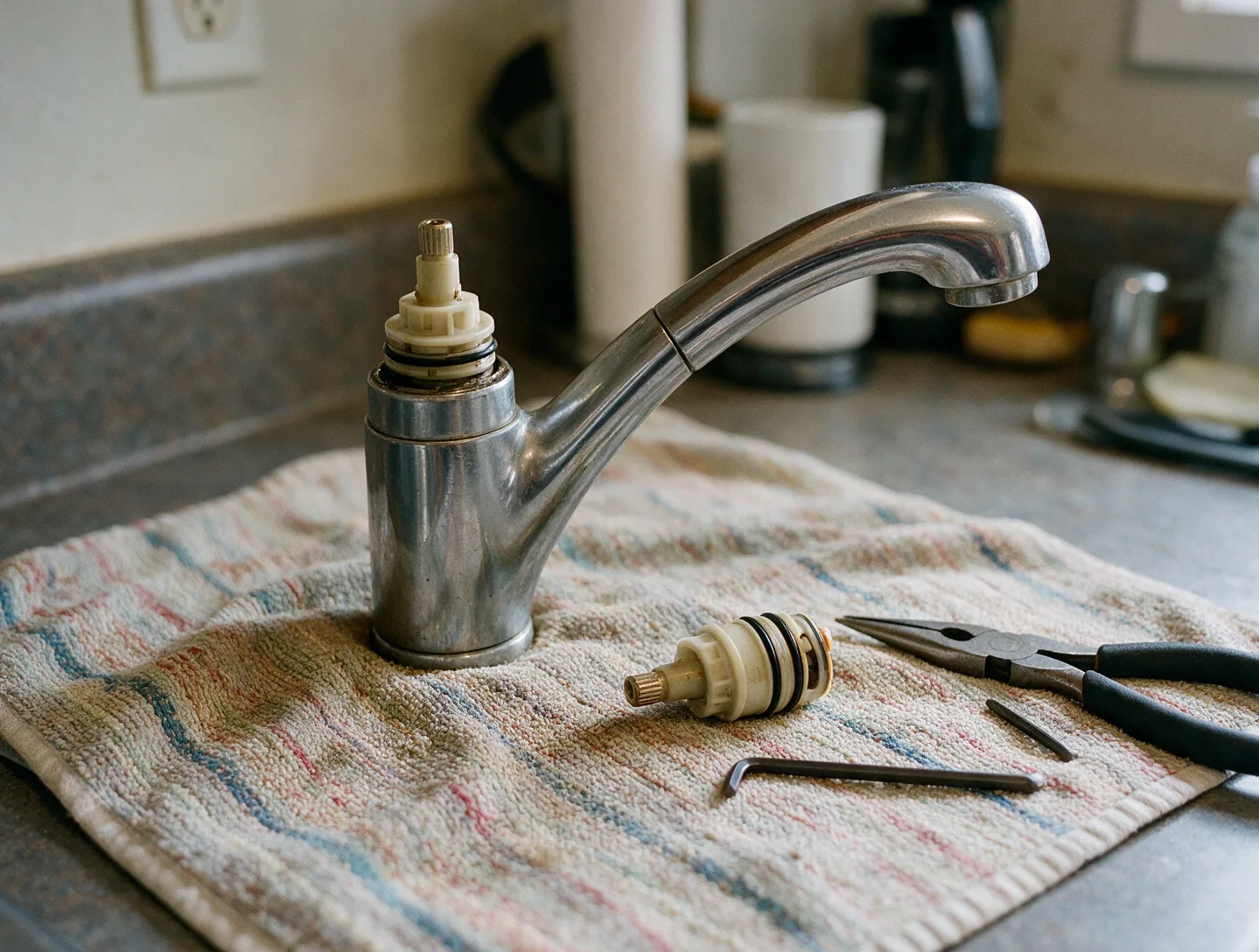
Cartridge valves inside single-handle faucets wear grooves in the brass housing after years of mineral buildup. When the cartridge no longer seals, water bypasses and drips. Two-handle compression faucets fail when the seat washer flattens or the stem packing dries out.
Under-sink drains leak at the slip nuts when the rubber washer hardens or the trap threads corrode. Galvanized traps in older homes collect rust flakes that reduce flow and push water out the joints. Stainless sinks can separate at the drain flange if the sealant ring cracks.
What Technicians Measure and Inspect on Site
We first test both shutoff valves for full closure and note whether they are quarter-turn ball or older multi-turn gate valves. Next the aerator screen is removed and flow is checked at each temperature to confirm hot and cold cartridges operate independently.
Drain arms are inspected for slope and the trap is removed to measure the tailpiece length and outlet height. Supply lines are checked for kinks and the compression nuts are tightened to see if the flare or ferrule has already deformed.
Repair Versus Full Replacement Choices
Cartridge replacement restores flow in many modern faucets without removing the body from the deck. When the valve seat is scored we seat-dress the housing or install a new stem-and-cartridge assembly. Compression faucets are rebuilt with new washers and packing in one visit.
Sinks with cracked bowls or separated drains require removal. We cut the old drain assembly, set a new basket strainer with plumber putty, and reconnect the trap arm. If the shutoffs leak during testing they are replaced with brass quarter-turn valves before the job finishes.
Parts and Materials Used for Lasting Fixes
Brass compression fittings and copper risers replace any kinked or corroded supply lines. PEX stubs with crimp rings connect to existing copper when the run is short. Drain traps are installed in either ABS or PVC depending on the existing piping material.
Faucet cartridges are matched to the original manufacturer number so the handle and escutcheon fit without modification. Aerators are swapped for the correct thread size and flow rate to maintain pressure balance between hot and cold sides.
Faucet and Sink Repair questions
Can I shut off the water myself before the technician arrives?
Locate the angle stops under the sink and turn them clockwise until they stop. If the handles are seized or the valves still drip after closing, leave them alone and shut the main water supply instead so the lines stay pressurized only until we arrive.
How do you decide whether to rebuild or replace the faucet?
We remove the handle and inspect the cartridge or stem. If the valve body shows deep scoring or the mounting nuts are frozen to the deck we recommend replacement. Otherwise new internal parts restore function without disturbing the existing supply connections.
What causes slow drains in bathroom sinks?
Hair and soap scum collect in the trap and pop-up rod linkage. Removing the trap and cleaning the tailpiece usually restores flow. If the arm has settled or the vent is blocked further in the wall the line must be cleared from the cleanout or roof vent.
Do you carry parts for older two-handle faucets?
We stock common brass stems, seat washers, and packing nuts sized for pre-1980 compression faucets. When the original seat is too worn for a new washer we carry reseating tools to cut a fresh surface so the valve holds without full replacement.
Schedule Faucet and Sink Repair
Tell us the fixture type and symptoms so we bring the correct cartridges and drain parts on the first visit.